
You do not have to solve death to live meaningfully beside the question
Beliefs about an afterlife range from resurrection and heaven to rebirth, ancestral presence, spiritual continuation, symbolic legacy and no continued consciousness. These views can shape grief, ethics and hope. None should be presented as a settled scientific fact or imposed as the only acceptable response to loss.
Why afterlife beliefs differ
Ideas about what happens after death arise through religion, family, culture, philosophy, grief, personal experience and reflection. Even people who share a religious identity may understand scripture, judgment, soul, rebirth or heaven differently. Some combine traditions; others reject supernatural claims but find continuity through memory, influence, nature or community.
A single label such as Christian, Muslim, Jewish, Hindu, Buddhist, Indigenous, spiritual or secular cannot tell you exactly what one person believes. Ask rather than assume, and let people describe their own language.
Common models—not a ranking
| Model | Broad idea | Careful limit |
|---|---|---|
| Resurrection or eternal life | Personal life continues or is restored through divine action, sometimes with judgment or communion with God. | Teachings and interpretations vary within and across traditions. |
| Reincarnation or rebirth | Life continues through another birth or stream of existence, often connected with karma or liberation. | Traditions disagree about soul, self, mechanism and ultimate goal. |
| Ancestral or spiritual presence | The dead remain connected with family, place, ritual or community. | Practices are culturally specific and should not be flattened into a generic “spirit world.” |
| Philosophical possibility | Arguments explore whether identity or consciousness could persist after bodily death. | A logically possible model is not evidence that it occurs. |
| Naturalistic finality | Conscious experience ends at death, while effects continue through people, matter and history. | This view can support deep meaning, ethics and ritual without supernatural belief. |
| Open uncertainty | A person does not claim to know and may remain curious. | “I do not know” is a complete and intellectually honest position. |
The BELIEF check
Basis
Is the claim based on doctrine, family tradition, personal experience, philosophy, research or a paid reader?
Evidence
What can be observed or tested, and what remains interpretation?
Limits
What does the source admit it cannot know? Could another explanation fit?
Impact
Does the belief support life and grief, or create terror, guilt, coercion or avoidance?
Ethics
Does it respect other people, cultural context, consent and appropriate care?
Flexibility
Can you question, revise or leave the idea without threats or financial pressure?
What science can and cannot answer
Medicine can study dying bodies, brain function, memory, perception and reports made after recovery from critical illness. Psychology and social science can study beliefs, grief and experience. Those methods do not currently establish that personal consciousness survives irreversible death.
Science also cannot decide what ritual, hope or philosophical interpretation should mean to you. It can evaluate a testable claim; it cannot convert every metaphysical question into a laboratory result. Be cautious when someone calls a spiritual teaching “the science of the afterlife” without reproducible evidence.
Near-death experiences
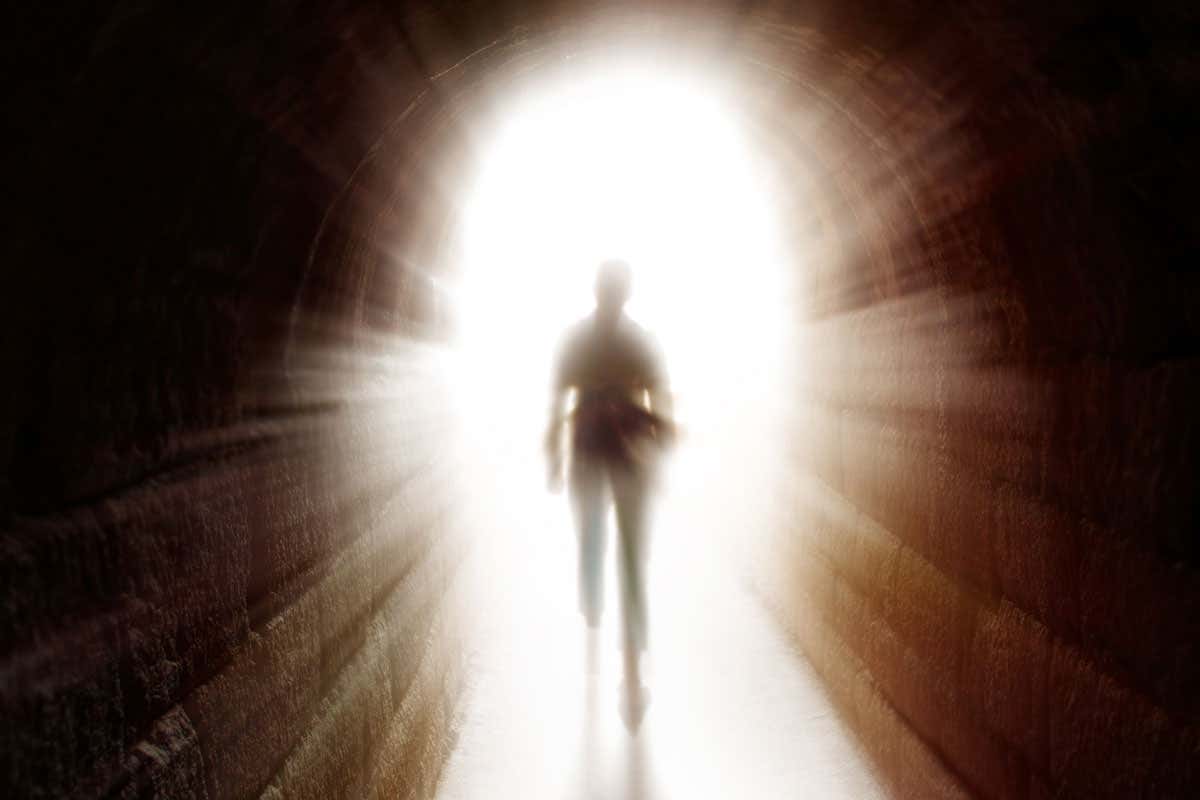
People revived after life-threatening events sometimes report light, peace, a life review, beings, separation from the body or other vivid experiences. These reports can profoundly affect the person. Proposed explanations involve physiology, memory, medication, expectation, culture and altered states, while spiritual interpretations understand them differently.
A near-death experience is not the same as confirmed observation after irreversible death. One testimony cannot prove a universal map of heaven or punishment. Listen respectfully without forcing a medical explanation or a spiritual conclusion on the person.
Mediumship and claimed messages
Mediums may sincerely describe receiving information from deceased people. Sincerity does not verify the source. Broad statements, feedback, prior information, chance and selective memory can make a reading feel more precise.
If a reading is part of your spiritual practice, set a budget, withhold searchable details, record exact statements and review hits and misses later. Our guide to mediumship evidence and grief-aware red flags offers a fuller test. Do not let a reading determine healthcare, inheritance, criminal accusations or contact with someone who has set a boundary.
Signs, dreams and sensed presence
A song, animal, dream, scent or sensed presence can become a meaningful connection after a death. It may be understood spiritually or through memory, attention and grief. The feeling is real even when the source is uncertain.
Use our guide to spirit signs and grounded discernment to separate event, association, interpretation and instruction. A sign should not become proof that the deceased approves a risky decision or condemns another person.
Grief does not follow a belief test
Belief may comfort
Hope of reunion, prayer, ritual and community can support some bereaved people.
Belief may complicate
Fear of punishment, uncertainty about the deceased or spiritual blame can intensify distress.
Doubt may appear
A loss can strengthen, weaken or change a worldview. This does not make grief morally wrong.
No belief may comfort
Memory, relationship, nature, values and shared history can support mourning without an afterlife claim.
Do not tell a grieving person that the death was required for a soul lesson, that they attracted it, or that distress shows weak faith. Ask what language is welcome. Practical presence—food, transport, paperwork, listening—may be more helpful than an explanation.
Fear of punishment
Some people experience intense fear of hell, judgment, spiritual contamination or having believed incorrectly. A trusted clergy member who does not use coercion may help within the person’s tradition. A licensed mental-health professional can also help when fear becomes intrusive, compulsive or disabling.
Repeated confession, reassurance seeking, ritual, checking or paid readings may give brief relief and then strengthen the fear cycle. No ethical teacher should threaten eternal punishment to obtain money, obedience, secrecy or access to a vulnerable person.
Reincarnation and soul lessons
Reincarnation and rebirth have distinct meanings across traditions. They should not be reduced to the claim that every hardship was chosen to teach a lesson. That idea can blame people for illness, poverty, abuse or disability and excuse preventable harm.
You may reflect on growth without claiming cosmic causation: “What support or value is useful now?” rather than “What did this person do in a past life to deserve this?” Human rights, healthcare and accountability apply regardless of a spiritual explanation.
Talking with children about death
Use clear, age-appropriate language. Euphemisms such as “went to sleep” can confuse or frighten young children. You can say, “Their body stopped working, and they died. People believe different things about what happens next. In our family, we believe…”
Invite questions, admit what you do not know and repeat information as needed. Do not tell a child that a dead relative is always watching every action or may punish them. Watch for persistent sleep, school, separation or functioning problems and seek appropriate support.
When partners or families disagree
Afterlife differences can surface around funerals, prayer, organ donation, memorials and what children are taught. Start with practical needs and shared values. Ask each person what a ritual communicates, what would feel violating and what can coexist.
One household might combine a religious service, a secular memory table and private practices. Compromise is not required when a ritual violates consent, safety or a clear legal directive. End-of-life and estate decisions require the applicable documents and qualified legal or medical guidance—not a claimed message from the deceased.
A careful way to study beliefs
- Read sources produced by the tradition as well as reputable scholarship about it.
- Distinguish official teaching, historical change, local custom and one person’s interpretation.
- Notice whether a source speaks for a whole culture without authority.
- Check who benefits when certainty is sold.
- Compare claims fairly; do not demand evidence from one view while exempting another.
- Speak with knowledgeable practitioners and allow internal diversity.
An afterlife reflection at home
At the kitchen table or outside in the yard, divide a page into four boxes: “What I was taught,” “What I currently believe,” “What I hope,” and “What I do not know.” Add one source you want to understand and one value you want to practise now.
For example, uncertainty about reunion might lead to the present value of saying love while people are alive. Belief in ancestral connection might lead to learning a family story. A naturalistic view might lead to preserving photographs, mentoring or caring for the environment. No purchase or dramatic ritual is required.
Questions for a teacher, medium or author
- Is this a doctrine, personal testimony, philosophical argument or testable claim?
- How do you represent disagreement within the tradition?
- What evidence would count against your claim?
- Do you use fear of death or punishment to sell services?
- Will you respect a client who doubts, stops or seeks professional care?
- How do you protect grieving people’s privacy and finances?
Living well without a final answer
The question of survival after death reaches into identity, consciousness, justice, love and meaning. You can explore it seriously while acknowledging uncertainty. The most reliable place to test an afterlife belief is often its effect on present conduct.
Does it increase compassion without excusing harm? Does it help you mourn without silencing grief? Does it allow other people freedom of conscience? Does it support care for this life? A belief that answers yes can be held humbly, without claiming that everyone else must share it.
Frequently asked questions
Is there scientific proof of an afterlife?
No reproducible scientific evidence currently establishes that personal consciousness survives irreversible death. People may still hold religious, spiritual or philosophical beliefs, but those should be identified as beliefs or arguments rather than settled science.
Do all religions teach the same thing about life after death?
No. Traditions—and people within the same tradition—differ about resurrection, judgment, heaven, rebirth, ancestors, soul and finality. Ask individuals and consult careful sources rather than assuming one universal doctrine.
Can a medium prove what happened to someone who died?
A reading may be meaningful, but confidence and specificity do not prove spirit contact. Protect personal information and money, review exact statements, and never use a claimed message in place of medical, legal or financial evidence.
Is it okay not to know what I believe?
Yes. Uncertainty can be an honest position. You can participate in remembrance, seek support, study different views and live by present values without forcing a final answer.