
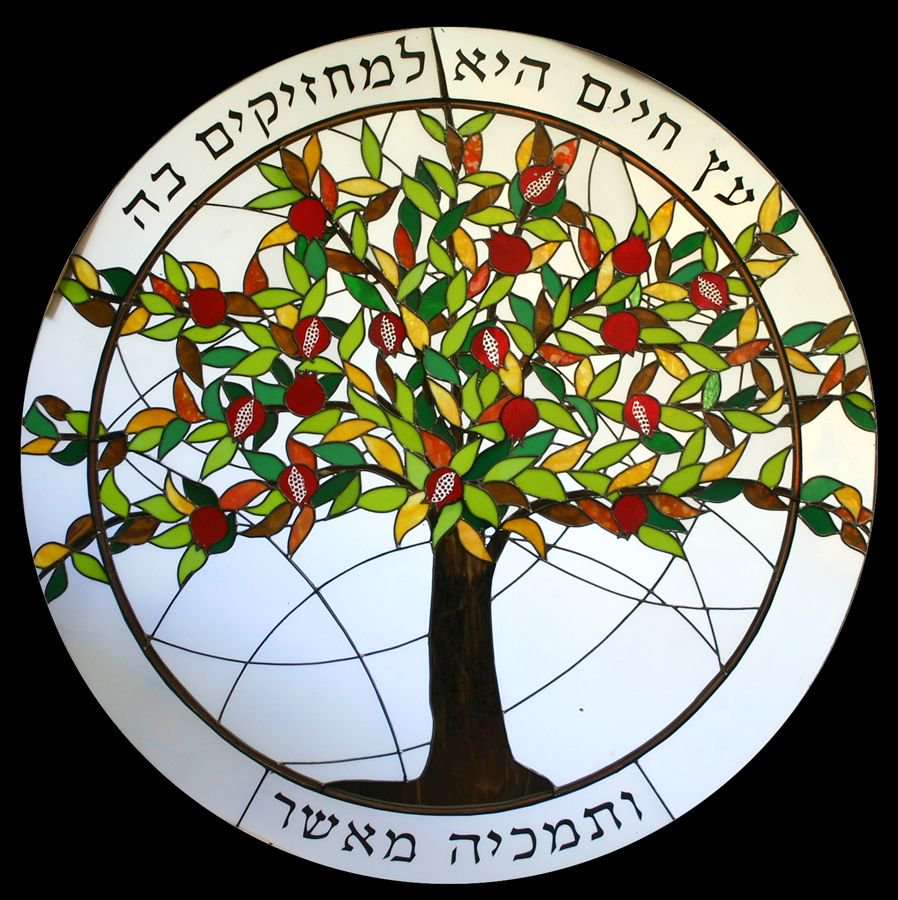
The Tree of Life is not one universal symbol with one fixed meaning. Tree imagery appears in art, religion, family history and contemporary jewellery, but each object belongs to a particular context. Shared visual features do not mean that different communities teach the same beliefs.
A useful starting point is to notice the image, identify its source and distinguish documented meaning from your own reflection.
Common visual themes
Roots can suggest ancestry, support or belonging; a trunk can suggest continuity; branches can suggest relationships, possibility or growth. Leaves, fruit, birds and seasonal changes add further meanings. These are possible readings, not rules that apply to every design.
A bare tree may express loss or renewal, while a fruiting tree may express abundance. Ask what the artist or community intended before deciding.
Context matters more than resemblance
A sacred tree in a religious text, a diagram in a mystical tradition and a tree printed on a necklace may look related while serving different purposes. Do not combine them into a single ancient teaching without evidence.
Museum records can help identify materials, dates and places. For example, the Metropolitan Museum documents a textile fragment with paired birds flanking a Tree of Life. Its object record is a better starting point than an unsourced social-media caption.
Use the ROOT reading method
- R — Record: note the shapes, colours, materials and surrounding figures.
- O — Origin: identify the maker, place, date and tradition when possible.
- O — Official context: consult the artist, museum or community source.
- T — Thoughtful reflection: label your personal meaning separately.
If the origin is unknown, say so. Uncertainty is more respectful than assigning a culture or belief because a design looks familiar.
Family and ancestry
A family tree uses branches to represent relationships, but a decorative Tree of Life does not establish genealogy. Family stories, records and consent are needed when researching living relatives.
For personal reflection, ask: Who supported me? Which inherited values help? Which patterns do I want to change? You may honour ancestry without idealizing every part of it.
Growth without pressure
A tree can remind you that growth is uneven and depends on conditions. Rest, setbacks and changing direction are not spiritual failures. Avoid using the symbol to promise wealth, healing or a predetermined destiny.
For a grounded way to notice meaning in ordinary life, explore everyday wonder and ethical meaning-making.
A simple home or yard exercise
Sit near a tree in the yard, or place a photograph at a home desk. Spend five minutes noticing its actual features. Draw roots, a trunk and several branches in a notebook.
- Write one source of support beside the roots.
- Write one value beside the trunk.
- Write one small next step beside a branch.
- Name one condition that would help that step succeed.
This is a reflection tool, not divination or treatment. If you feel overwhelmed, use a brief present-focused centering practice and return to an ordinary task.
Choosing jewellery or artwork
Ask the seller who designed the piece and what its symbols mean. Prefer clear attribution, fair payment and accurate descriptions. Avoid claims that a pendant guarantees protection, fertility, healing or financial success.
Some sacred designs or practices have community-specific restrictions. Learn from people within the tradition rather than assuming that all spiritual imagery is freely interchangeable.
Real trees and practical care
Symbolic appreciation can lead to ordinary care: learn about a local species, support habitat or maintain a tree responsibly. Choose planting and maintenance guidance suited to your climate and property, and consult an arborist for safety concerns.
A symbol is most useful when it encourages attention, responsibility and respect rather than certainty about unseen forces.
Frequently asked questions
Does the Tree of Life mean the same thing everywhere?
No. Meaning depends on the object, artist, community and tradition. Similar tree imagery does not prove identical beliefs.
What do roots and branches symbolize?
They may suggest ancestry, support, connection or growth, but these are possible interpretations. Check the source before assigning a fixed meaning.
Does Tree of Life jewellery provide spiritual protection?
A piece may carry personal or religious significance, but it cannot guarantee protection, healing, fertility or financial outcomes.
How can I use the symbol respectfully?
Identify its origin, consult sources from the relevant community, credit the maker and keep documented meaning separate from personal reflection.