
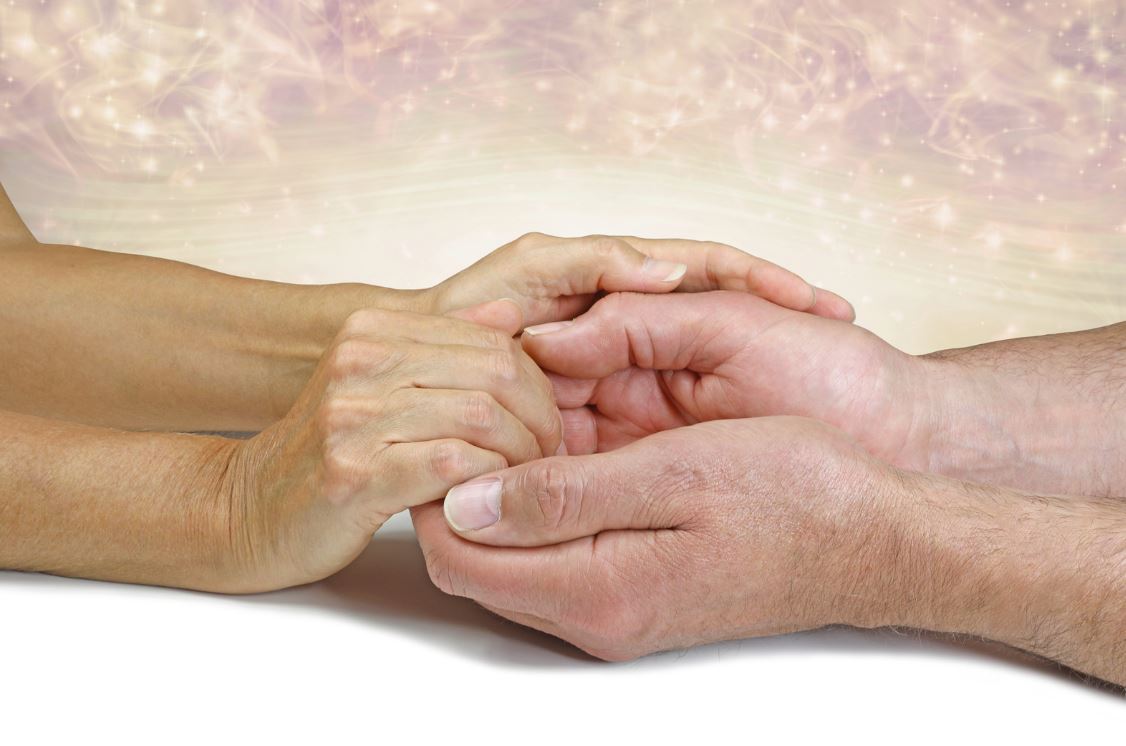
Energy healing is a spiritual or complementary practice built around the idea that a practitioner can sense or influence a subtle energy field. People may use Reiki, healing touch, visualization or similar rituals for relaxation and meaning. Science has not established that such an energy field exists, and energy work has not been shown to develop supernatural abilities.
You can still explore the practice as a structured attention exercise. The safest goal is not to become certain that you read minds, hear spirits or cure illness. It is to notice sensations and impressions, consider ordinary explanations, and make decisions through evidence, consent and appropriate professional advice.
Separate three different goals
- Relaxation: creating a quiet pause that may feel restorative.
- Reflection: using imagery or ritual to explore values and emotions.
- Health treatment: diagnosing or treating a condition with evidence-based care.
An energy ritual may serve the first two goals for some people. It should not be presented as the third unless the provider is appropriately licensed and is using a supported treatment within their scope.
The SENSE practice
- Settle: choose a comfortable, ordinary place and a short time limit.
- Experience: describe what you notice without naming a supernatural cause.
- Name alternatives: include posture, temperature, expectation, memory and emotion.
- Seek evidence: verify claims that affect health, money, safety or another person.
- End: orient to the room and choose one practical next action.
This framework allows spiritual curiosity while preventing an impression from becoming a diagnosis or command.
A realistic home or yard session
Sit at a kitchen table, a modest home desk or a safe chair in the yard. Put both feet where they feel supported. Set a five-minute timer and keep water nearby. Expensive crystals, special clothing and a professional studio are unnecessary.
Notice contact with the chair, the temperature of your hands and three sounds around you. If you choose, hold your hands a comfortable distance apart and describe sensations such as warmth, tingling or pressure. These sensations can have ordinary physiological and attentional explanations; they do not prove an invisible energy field.
Intuition is a hypothesis
An intuitive impression can arise from experience, pattern recognition, expectation, emotion or chance. Treat it as a prompt to ask a question, not as hidden knowledge. Write the impression before checking the outcome so memory cannot quietly reshape it later.
Use specific language: “I felt tense when the topic changed” is an observation. “Their energy proves they are lying” is an unsupported conclusion. Ask directly, respect the answer and allow for uncertainty.
Psychic labels are belief-based descriptions
Spiritual communities often use clairvoyant for visual impressions, clairaudient for auditory impressions, clairsentient for felt impressions and claircognizant for a sense of knowing. These labels are used inconsistently and are not scientifically verified powers or regulated healthcare credentials.
For a practical comparison of common practitioner terms, read The Difference between Clairvoyant, Intuitive and Medium. A label does not establish accuracy, ethics or competence.
Visual impressions
Images during relaxation may come from imagination, memory, expectation or ordinary visual effects. Record the image neutrally and ask what it reminds you of. Do not use it to identify disease, predict danger or accuse another person.
Auditory impressions
Inner speech, remembered music and environmental sounds can feel vivid. Hearing a voice that others do not hear has many possible causes and should not automatically be interpreted as a guide or spirit. Do not intensify a voice, follow harmful commands or let a psychic diagnose the experience.
Seek professional advice for new, recurring, worsening or distressing voices. Use local emergency or crisis services if a voice commands harm, you cannot stay safe, or confusion and agitation develop rapidly.
Felt impressions and empathy
Body sensations can reflect posture, temperature, stress, hunger, illness or emotional response. Feeling uneasy near someone does not prove that you absorbed their energy or know their intentions. You may set a boundary because you are uncomfortable without making a supernatural accusation.
A sense of “just knowing”
Fast judgments can sometimes draw on experience, but confidence is not accuracy. Before acting, ask what evidence supports the idea, what could disconfirm it and what the cost of being wrong would be. Higher-stakes decisions require stronger evidence.
Energy work is not medical treatment
Reiki and related approaches have not been clearly shown to work for health purposes, and research has not established the proposed energy field. A quiet session may feel relaxing, but relaxation is not proof that disease was treated.
Do not delay diagnosis, stop medication, alter rehabilitation or substitute an energy session for mental-health or emergency care. Tell healthcare providers about complementary practices and any products or supplements you use. For a broader guide to practical self-support alongside care, see How to Use Self-Healing to Better Your Life.
Consent must be explicit
Ask before touching someone, moving close to their body, praying over them or performing an “energy scan.” Explain what will happen, where hands will be placed, how long it will take and that permission can be withdrawn at any time.
Never claim to read private thoughts, trauma, pregnancy, illness or sexual history from someone’s energy. Do not practise on children or dependent adults without appropriate guardian consent and safeguards.
Keep a clean record
Create four columns:
- what I observed;
- what I interpreted;
- ordinary alternatives;
- what evidence or conversation could check it.
Count misses as well as apparent hits. Avoid vague predictions, retrofitting, selective memory and repeated attempts until something seems correct. If a practice becomes compulsive or increases fear, stop and seek support.
Test impressions without harming anyone
Use low-stakes, pre-agreed exercises. A friend might privately choose one of four neutral pictures while you write a guess before the reveal. Repeat enough trials to see misses as well as matches. Do not call a chance result proof of a gift, and never test medical, legal, financial or relationship claims this way.
“Clearing negative energy” should mean a practical reset
Open a window if safe, tidy one small area, reduce noise, stretch gently, take a break or step into the yard. These actions can change the environment and your attention. They do not remove a supernatural substance, curse or another person’s influence.
If a room feels unsafe, check lighting, ventilation, locks, noise and interpersonal behaviour. Address the concrete issue rather than paying someone to clear an unseen threat.
Choosing a practitioner
Ask about training, scope, touch, price, cancellation terms and how the practitioner handles health concerns. A trustworthy provider describes energy work as complementary and does not guarantee results.
Leave if someone:
- claims to cure illness or detect disease through energy;
- tells you to stop treatment or avoid a clinician;
- says a curse, entity or blocked chakra requires urgent payment;
- uses touch without clear consent;
- claims certainty about another person’s thoughts or future;
- pressures you into escalating sessions, secrecy or expensive products.
Practising with others responsibly
Do not call yourself a healer if people could mistake the term for a healthcare qualification. State what you offer, what you do not offer and that experiences are subjective. Keep notes minimal and private, avoid collecting unnecessary health information, and never promise a result.
If someone reports serious symptoms, encourage appropriate professional care. If there is immediate danger, contact local emergency services. Spiritual respect and medical safety can coexist.
A seven-day grounded exploration
- Day 1: define whether your goal is relaxation or reflection.
- Day 2: complete a five-minute home SENSE practice.
- Day 3: separate one observation from its interpretation.
- Day 4: list three ordinary explanations for a sensation.
- Day 5: test one neutral impression and record the miss or match.
- Day 6: review consent, cost and practitioner boundaries.
- Day 7: keep the practice only if it supports calm, agency and reality-based choices.
The purpose is disciplined reflection, not proof of a supernatural identity. Stop if the practice increases anxiety, certainty without evidence, compulsive checking or withdrawal from trusted care and relationships.
Frequently asked questions
Can energy healing develop psychic powers?
There is no scientific evidence that energy healing creates psychic powers. You may use a session to practise attention and reflection, but impressions should remain hypotheses and consequential claims need independent evidence.
Is Reiki proven to heal illness?
No. Reiki has not been clearly shown to be effective for health-related purposes, and the proposed energy field has not been scientifically established. It should not replace or delay qualified care.
How can I practise safely at home?
Use a five-minute timer at an ordinary table, desk or safe place in the yard. Describe sensations neutrally, consider everyday explanations, end by orienting to the room and take one practical action.
What are warning signs in an energy healer?
Avoid practitioners who diagnose disease, guarantee cures, discourage medical care, use touch without consent, claim certainty about minds or spirits, or demand urgent escalating payments to remove danger.